


CREATING MOMENTUM FOR ENTERPRISES AND INDUSTRIAL PARKS TOWARD SUSTAINABLE DEVELOPMENT

CREATING MOMENTUM FOR ENTERPRISES AND INDUSTRIAL PARKS TOWARD SUSTAINABLE DEVELOPMENT
Policies and incentives for the eco-industrial park (EIP) model are expected to be further clarified, helping businesses better understand their benefits and the roadmap for transitioning toward sustainability.
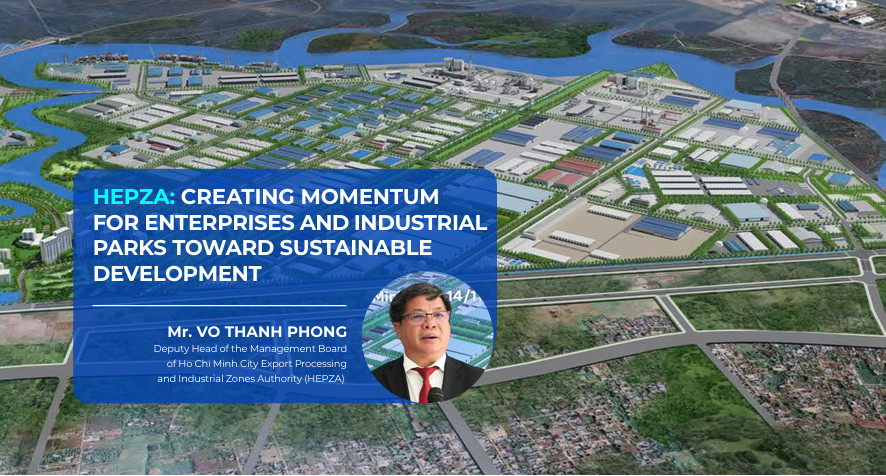
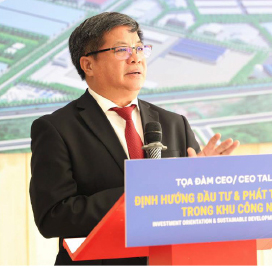
At the CEO talk show “Investment Direction and Sustainable Development in Industrial Parks,” Mr. Vo Thanh Phong – Deputy Head of the Management Board of Ho Chi Minh City Export Processing and Industrial Zones Authority (HEPZA) – outlined upcoming policy directions and emphasized the city’s commitment to transitioning industrial parks toward an ecological model aligned with its green-growth roadmap.
The city’s development space is being reshaped. Industrial parks must now adapt to environmental standards, adopt new technologies, and shift toward an ecological model.

Mr. Vo Thanh Phong
Deputy Head of HEPZA
4 Core Requirements for Eco-Industrial Parks
Industrial symbiosis
Reducing energy, water, and waste
Using renewable energy and providing transparent reporting on resource use and emissions. The model is evaluated across 24 criteria covering environmental, economic, social, and managerial aspects.
Enterprises operating within EIPs must also comply with five criteria – with cleaner production being mandatory
CLARIFYING ENTERPRISE BENEFITS
Once recognized as an eco-industrial park, both the park and its businesses are eligible for incentives such as:
Land rent exemptions or reductions
Access to green credit
Eligibility to issue green bonds
Priority in investment promotion, export programs, and access to government financial funds
However, Mr. Phong noted that some incentives require clearer guidance:
We are working to refine procedures so businesses understand where they can borrow, at what interest rate… avoiding a situation where recognition is only ‘on paper’ while actual access remains limited.
Beyond financial incentives, Mr. Phong emphasized the long-term competitive advantage:
I understand that many industry associations have already set very clear roadmaps and criteria. By a certain stage, if businesses fail to meet environmental, emissions, or governance standards, they will no longer have opportunities to participate in service chains – even in maritime logistics.
If we do not act now, in another one or two years, we may no longer have a place in those chains.
ADDRESSING CHALLENGES IN THE TRANSITION
Many factories have operated for decades and no longer have land reserves for green spaces or green infrastructure. Businesses also hesitate due to investment costs, limited technical expertise, and the need to change long-standing operating habits.
To ease these hurdles, HEPZA has coordinated with ministries – particularly the Ministry of Natural Resources and Environment – to study compensatory mechanisms. One proposal is:
Allowing a 1% shortfall in green area to be offset by an equivalent volume of internal carbon credits, provided businesses implement cleaner production and emission-reduction measures.
If approved in the revised decree, this mechanism would help resolve one of the major obstacles businesses face in their transition toward sustainability.
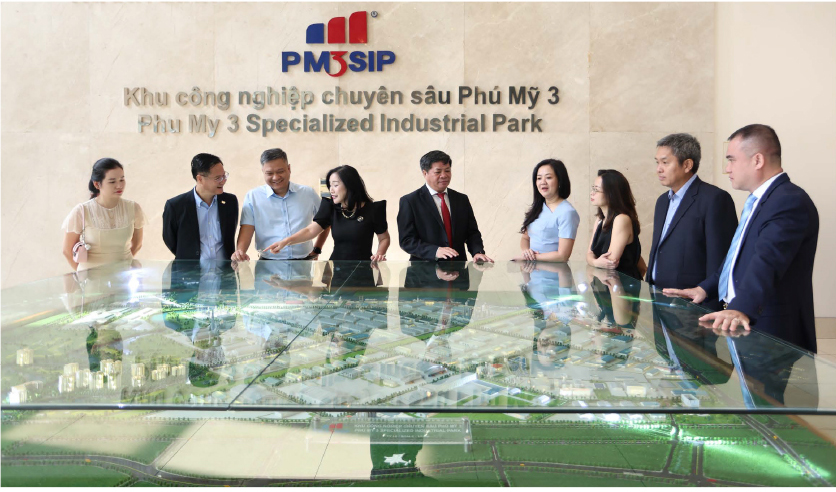
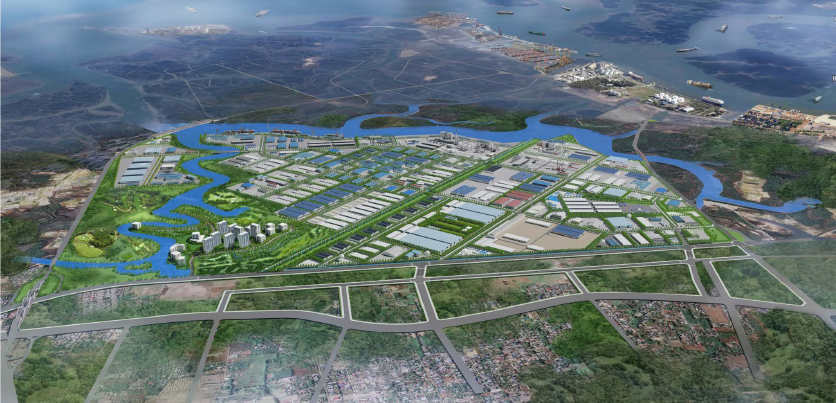
At the same time, administrative guidelines will be standardized and streamlined. The EIP model is currently being piloted in Phu My 2 and Phu My 3 Industrial Parks, where international experts have directly supported businesses in auditing energy and water use, advising on industrial symbiosis, and implementing efficiency solutions.
Phu My 3 IP has achieved 21 out of the 24 criteria and is preparing its application for official recognition. Insights from the pilot will be used to develop a technical handbook for all industrial parks and export processing zones starting in 2027.
STARTING WITH SMALL, PRACTICAL STEPS
Mr. Phong emphasized that businesses do not need to begin with large investments; the transition can start with small, low-cost measures that deliver clear improvements and reduce pressure before moving on to larger-scale solutions.
Echoing this perspective, NS BlueScope Vietnam has also begun with straightforward solutions such as switching to LED lighting, optimizing processes, recycling solvents, reusing rainwater, and adopting solar energy step-by-step.
The company aims to reduce carbon emissions by 30% per unit of product by 2030, viewing sustainability as a strategic pathway to enhance credibility within global supply chains.

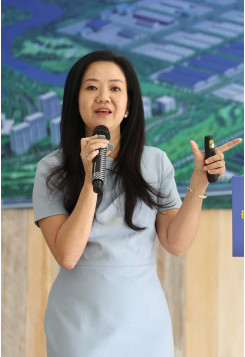
Ms. Lam To Trinh
Vice President, Product & Segment Development of NS BlueScope Vietnam
According to Ms. Lam To Trinh, pursuing ESG has become a competitive advantage as more partners require suppliers to meet environmental standards and disclose emissions transparently.
Proactively adopting sustainable practices helps businesses not only meet market expectations but also strengthen their position within supply chains, as many customers now evaluate and select suppliers based on sustainability performance.

Related posts