AN ESG JOURNEY FROM SMALL STEPS TO LONG-TERM COMPETITIVE ADVANTAGE

AN ESG JOURNEY FROM SMALL STEPS TO LONG-TERM COMPETITIVE ADVANTAGE
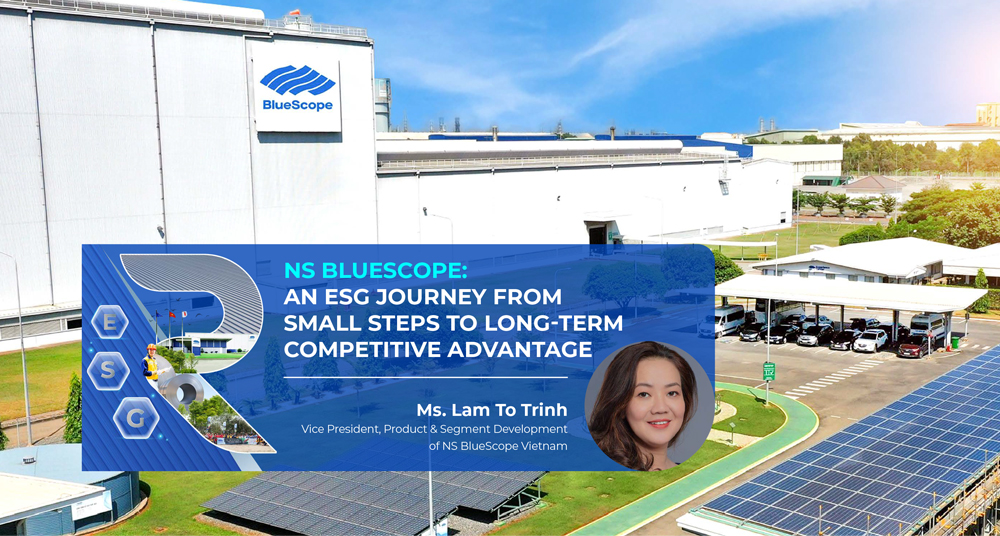
From practical experience, NS BlueScope demonstrates that implementing ESG standards can begin with small, incremental improvements in day-to-day operations.
Sharing at the CEO Talk Show “Investment Direction and Sustainable Development in Industrial Parks,” Ms. Lam To Trinh, Vice President, Product & Segment Development of NS BlueScope Vietnam – emphasized that
ESG should not be seen as a “mandatory exam”, but rather as a foundational governance framework that helps businesses meet legal requirements, improve their competitiveness in supply chains, and align more closely with international market standards.
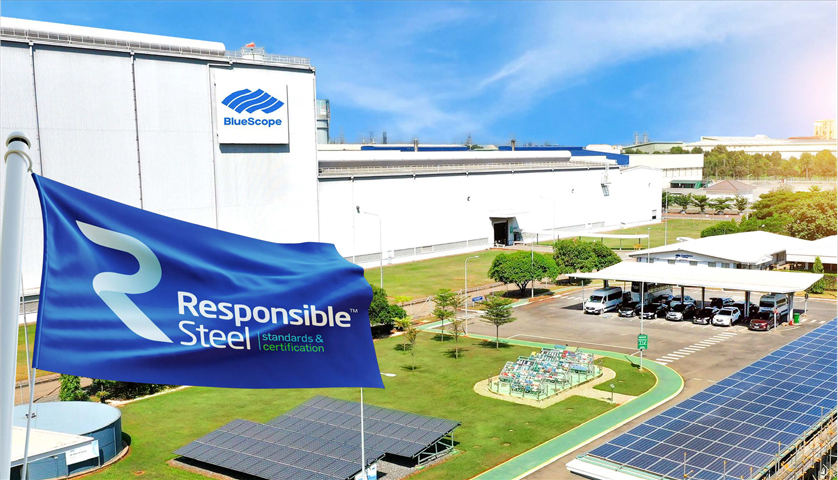
One example is NS BlueScope’s attainment of the ResponsibleSteel™ certification, which has strengthened the company’s credibility and improved access to markets with stringent ESG expectations.
“The key is not whether a business is large or small, or operates in a heavy or light industry, but whether it chooses the right starting point. Businesses that begin early will have greater opportunities to build long-term value and establish a strong foundation for sustainable growth.

Ms. Lam To Trinh
Vice President, Product & Segment Development of NS BlueScope Vietnam
CLEAR ESG ROADMAP BUILT FROM SMALL STEPS
In its early phase, NS BlueScope rolled out a series of modest yet impactful operational improvements:
Switching from wet to dry sludge to reduce treatment costs
Recycling approximately 3.5 tons of solvent each year
Reprocessing leftover paint for auxiliary applications, saving VND 500 million annually and reducing 6.7 tons of CO₂
Collecting rainwater and installing zone-based water meters to monitor usage, saving 5,000 m³ of water per year
These may be small changes, but they form an essential foundation for a long-term ESG strategy.
Ms. Trinh noted that NS BlueScope’s ESG roadmap spans nearly two decades and is structured into three phases:
2013-2022
The company focused on reducing energy consumption by
● Switching to LED lighting
● Upgrading production lines, expanding automation
● Collaborating with partners to adopt more eco-friendly materials
These measures have helped NS BlueScope cut more than 4 million kilograms of CO₂ while significantly optimizing operating costs.
2023-2026
The company is accelerating renewable-energy adoption by
● Installing solar systems at parking areas
● Gradually expanding coverage across the entire factory
Starting in 2025, ESG criteria will become mandatory in the company’s partner and supplier selection process.
2027-2030
The company will shift its focus to new technologies, particularly energy-efficient drying systems, aiming to reduce emissions by an additional 11–14%.

NS BlueScope has set a target of reducing carbon emissions by 30% per unit of product by 2030, aligning with the national 2050 carbon neutrality roadmap
BUILDING ESG-ALIGNED PROJECTS:
DESIGN MATTERS FROM THE START
Beyond production improvements, NS BlueScope integrates ESG principles into the development and support of construction projects that meet global environmental and energy-efficiency benchmarks.
The company supplies materials for some of the first projects in Vietnam to achieve international certifications
It has also upgraded its office and canteen complex at the Phu My 1 steel factory to meet LEED Gold standards, aligning with ESG evaluation criteria
Phu My 1 steel factory to meet LEED Gold standards
Ms. Trinh shared that retrofitting existing, operational buildings to meet ESG-related performance standards can be costly and complex, often requiring upgrades or replacements of MEP systems, lighting, water supply and drainage, and enclosure materials. Therefore, integrating ESG criteria from the design stage enables businesses to make a single investment that generates long-term benefits throughout the building’s lifecycle.
In terms of roofing and walling materials, NS BlueScope has developed the COLORBOND® steel with long lifespan and excellent solar reflectance, helping reduce maintenance and replacement costs. This not only minimizes resource extraction but also cuts construction waste and lowers operational expenses.
“A building that remains durable for 40–50 years with minimal repairs represents an investment that optimizes both resources and long-term costs.” — Ms. Trinh
NS BlueScope’s ESG journey illustrates how businesses can:
Transform sustainability commitments into tangible competitive advantages
Contribute meaningfully to the environment, communities, and the long-term development of the economy